
Direct Answer for Search & AI Overview:
Hair frequently remains dry after conditioning because traditional rinse-out conditioners primarily deposit surface lubricants onto the outermost cuticle rather than infusing internal cortex moisture. When hair fibers have high porosity (from heat, chemical dyes, or mechanical friction), cuticle scales remain lifted or damaged, allowing hydration to evaporate rapidly into ambient air. The most common causes of post-conditioning dryness include applying conditioner to dripping-wet hair, insufficient dwell time, washing with hot water, hard water mineral deposits, and accumulated silicone or product buildup that blocks conditioning agents. Solving persistent dryness requires gentle cleansing, plant keratin reinforcement, and sealing with rich emollients.
Why Conditioner Doesn't Always Solve Dry Hair
Few haircare struggles are as frustrating as stepping out of the shower after using conditioner, only to find your hair drying into a rough, brittle, straw-like texture. To understand why this happens, look at the physical architecture of a hair strand:
- The Cuticle: The outermost protective shield, made of 6 to 10 overlapping layers of keratin scales resembling shingles on a roof. A healthy cuticle is bound by 18-MEA (a natural lipid coating) that repels water and keeps hair silky.
- The Cortex: The thick inner core making up roughly 85% of hair volume. It contains keratin protein chains and the structural water that gives hair elasticity and bounce.
- The Medulla: The central core present primarily in coarse or thick hair.
Most standard conditioners are formulated with cationic surfactants, silicones, and fatty alcohols that coat the outside of the cuticle. While this provides temporary slip in the shower, it does not repair damaged cuticle scales or replenish water deep inside the cortex. If the outer cuticle remains lifted or compromised, any water absorbed in the shower evaporates within hours, leaving strands feeling dry and parched.
9 Reasons Your Hair May Still Feel Dry
If conditioner does not seem to make a difference in your hair's softness, one of these nine hidden culprits is usually responsible:
1. Excessive Heat Styling Without Thermal Protection
Blow-dryers, flat irons, and curling wands reaching temperatures above 180°C flash-evaporate bound water from the cortex and melt the natural lipid layer of the cuticle. When hair cuticles are heat-blistered, conditioner can only provide temporary cosmetic slip.
2. Over-Washing With Harsh, High-pH Shampoos
Soaps and harsh sulfate shampoos operate at an alkaline pH (7.0 to 9.0), causing the hair cuticle to swell and flare open. If your shampoo aggressively strips hair lipids, a standard 60-second conditioner application cannot fully restore the depleted lipid matrix.
3. Compromised Cuticle Integrity from Chemical Treatments
Bleaching, permanent hair dyeing, and chemical straightening break disulfide bonds and dissolve 18-MEA lipids. This turns hair into "high-porosity" fiber—it absorbs moisture rapidly like a sponge, but loses it just as quickly because there is no outer lipid barrier to seal it in.
4. Applying Conditioner to Dripping-Wet Hair
When hair is soaking wet, water molecules fill all the voids in and around the hair fiber. Applying conditioner over dripping hair causes the formula to slide right off or dilutes the active conditioning agents before they can adhere to the negatively charged strand surface.
5. Insufficient Dwell Time
Conditioners work via electrostatic attraction: positively charged conditioning molecules bind to negatively charged damaged areas of the hair. This binding takes time. If you apply conditioner and immediately rinse it off 10 seconds later, the active ingredients never have time to deposit effectively.
6. Hard Water Minerals Blocking Moisture
If your shower water has high levels of calcium, magnesium, and heavy metals, these minerals bind to the hair shaft and form an insoluble film. This mineral crust acts as an impenetrable shield that prevents conditioners and hair oils from touching the actual hair fiber.
7. Accumulated Product and Silicone Buildup
Using non-water-soluble silicones and styling sprays without periodic clarifying creates a plasticizing barrier over time. Ironically, this buildup locks external moisture out, leaving hair progressively drier underneath the coating. Learn more in our guide on Scalp Buildup: What It Is, Why It Happens & How to Remove It.
8. Environmental Exposure (Sun, Dry AC Air & Wind)
Prolonged UV exposure degrades keratin amino acids, while indoor air conditioning and dry winter winds pull moisture out of the hair fiber throughout the day.
9. The Protein vs. Moisture Imbalance
Hair requires a balance of elasticity (moisture) and structural integrity (protein). If you use too many intensive keratin or protein treatments without adequate emollients, hair becomes protein-overloaded—stiff, brittle, and prone to snapping.
Are Dry Hair and Damaged Hair the Same?
While people often use "dry" and "damaged" interchangeably, they require slightly different approaches:
| Evaluation Aspect | Dry Hair (Dehydration) | Damaged Hair (Structural Compromise) |
|---|---|---|
| Underlying Issue | Lack of natural sebum lubrication and cortex water | Broken keratin protein chains & lifted/fractured cuticles |
| Typical Causes | Climate, infrequent conditioning, coarse hair texture | Bleaching, chemical coloring, frequent flat-ironing |
| Tactile Texture | Rough, stiff, straw-like, but maintains elasticity | Brittle, snaps easily when stretched, gummy when wet |
| Porosity Level | Low to moderate porosity | High porosity with porous voids along the shaft |
| Best Solution | Rich humectants, plant oils, and barrier emollients | Hydrolyzed plant keratin + lipid-sealing conditioners |
How to Use Conditioner Properly
Changing how you apply conditioner can dramatically improve its effectiveness:
- Gently Squeeze Out Water First: After rinsing your shampoo, use your hands to gently squeeze excess water from your hair lengths before reaching for conditioner.
- Focus Strictly on Mid-Lengths and Ends: Start applying conditioner roughly 3 inches below the scalp and work down to the tips.
- Use a Wide-Tooth Comb: Gently comb the conditioner through your lengths to ensure every strand is evenly coated.
- Allow 3 to 5 Minutes of Dwell Time: Let the conditioner sit while you finish the rest of your shower routine.
- Finish with a Cool Water Rinse: Rinsing with cool water helps flatten cuticle scales and lock in deposited emollients.
How Often Should You Condition Your Hair?
You should condition your hair lengths every single time you wash your hair. While the scalp only needs shampoo when oily or congested, the mid-lengths and ends of hair are older and continuously exposed to friction, UV light, and styling. Even if you rinse with shampoo just twice a week, always follow with conditioner.
A Simple Routine for Dry or Damaged Hair
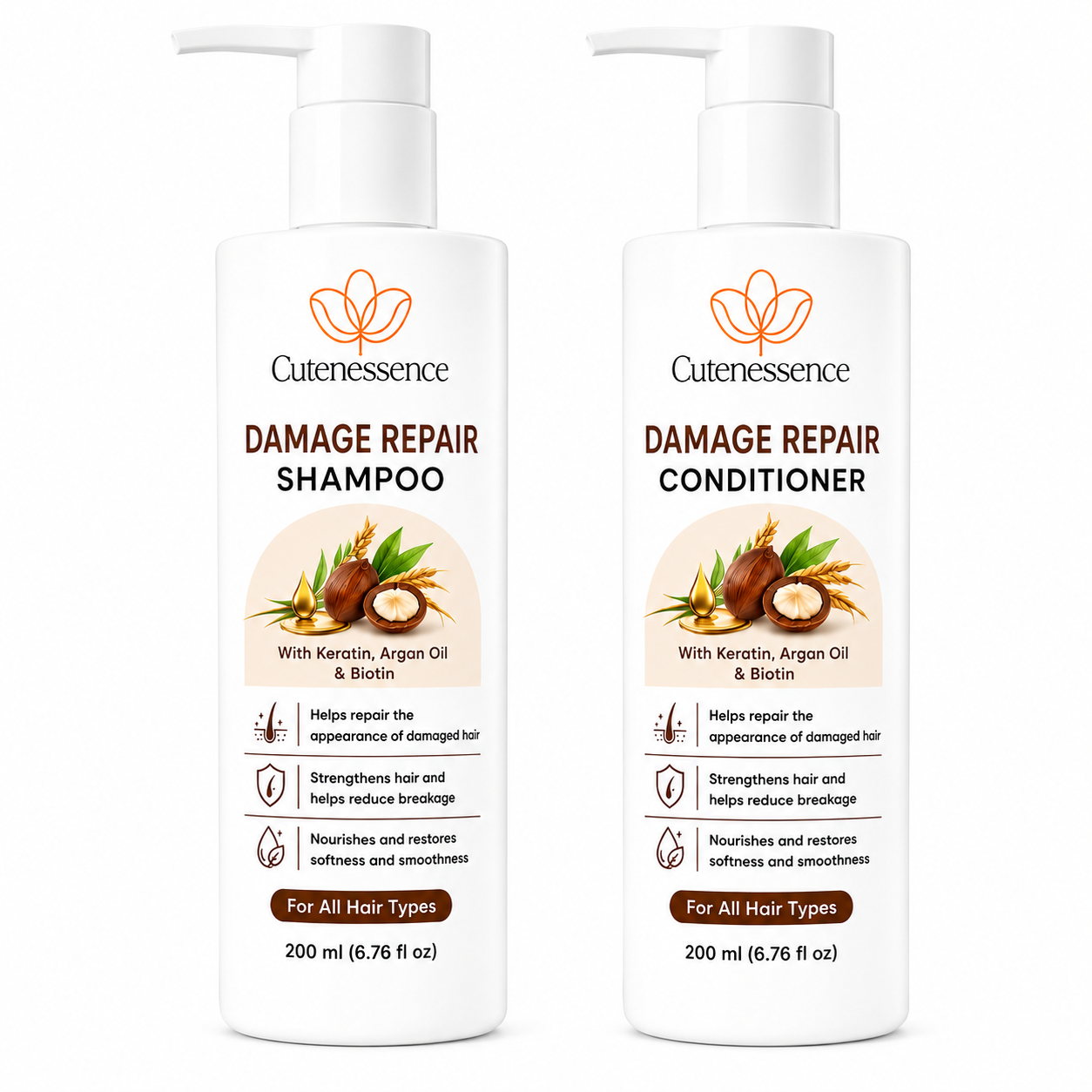
- Step 1 (Restorative Wash): Cleanse with Damage Repair Shampoo. Formulated with plant keratin and nourishing argan oil, it cleanses without stripping delicate cuticle lipids.
- Step 2 (Deep Cuticle Conditioning): Apply Damage Repair Conditioner to damp mid-lengths and ends. Leave on for 3 to 5 minutes to allow plant keratin proteins to smooth rough cuticle gaps.
- Step 3 (Comprehensive Routine): If your hair feels brittle across all dimensions, consider rotating in the multi-benefit 7 in 1 Repair Shampoo. To map out a complete regimen, review How to Build a Simple Hair-Care Routine for Your Hair Type.
Mistakes That Can Make Dry Hair Worse
- Rubbing hair vigorously with a rough cotton towel: Friction tears lifted cuticles. Instead, gently blot or wrap hair in a soft microfiber towel or cotton t-shirt.
- Brushing soaking-wet hair with a fine-tooth comb: Wet hair is fragile and stretches up to 30% before snapping. Always use a wide-tooth comb with conditioner slip.
- Skipping conditioner to "save time": Skipping conditioner leaves cuticle scales flared open, accelerating moisture loss and split ends.
Frequently Asked Questions
No cosmetic product can permanently mend split ends back together. Conditioners and hair serums temporarily seal and smooth split ends cosmetically to prevent them from traveling further up the hair shaft, but regular trims are necessary to eliminate them permanently.
High heat strips water from the hair cortex. Always use a thermal protectant, keep the dryer nozzle pointing downward along the cuticle, and finish with the cool-shot button to seal in moisture.
No. Rinse-out conditioners contain higher concentrations of cationic surfactants designed to be washed away. Leaving them in can cause scalp irritation and buildup. For leave-in care, use a dedicated leave-in serum or fluid.
Yes. Hard water minerals leave a chalky film on hair that blocks conditioner from binding to the hair fiber. Using a shower filter or periodic clarifying wash restores hair softness.


