
Direct Answer for Search & AI Overview:
Scalp buildup is the accumulation of oxidized sebum, shed dead skin cells, sweat salts, and cosmetic styling residue (such as silicones, waxes, polymers, and dry shampoo powders) on the scalp surface and around hair follicles. Unlike dandruff, which is driven by an overgrowth of Malassezia yeast leading to loose, oily flakes and itching, general scalp buildup stems primarily from infrequent or hurried cleansing and heavy product layering, appearing as a waxy or grayish film that gathers under fingernails when scratched. Safely removing buildup requires a clarifying wash using lukewarm water, botanical surfactants, and gentle finger-pad massage, followed by a scalp-neutral routine.
What Is Scalp Buildup?
Scalp buildup is a common, non-medical cosmetic condition where foreign residues and physiological secretions collect on the scalp. Your scalp is living skin—in fact, it contains a higher density of sebaceous glands and hair follicles than almost any other area of the body. Every single day, your scalp naturally produces sebum (protective epidermal lipids) and sheds thousands of microscopic dead skin cells (corneocytes).
When this natural biological shedding mixes with external products—leave-in conditioners, hairsprays, hair gels, serums, dry shampoo starches, and urban particulate pollution—it forms a stubborn, sticky matrix. If not thoroughly emulsified and rinsed away during regular wash days, this matrix adheres closely to the follicular openings, leaving hair roots feeling heavy, sticky, and coated.
What Causes Scalp Buildup?
Scalp buildup rarely has a single isolated cause. For most people, it represents a combination of physiological secretions and everyday styling habits:
- Excess Sebum Production: Sebaceous glands produce sebum to lubricate and protect hair shafts. When glands overproduce oil due to genetics, stress, or hormonal fluctuations, the excess oil serves as a sticky adhesive that traps dead cells and debris.
- Heavy Styling Products & Insoluble Silicones: Products designed to provide long-lasting hold, extreme shine, or humidity resistance often use heavy polymers, waxes, or non-water-soluble silicones (such as dimethicone). Without a thorough wash routine, these compounds accumulate layer upon layer.
- Dry Shampoo & Starch Powders: Dry shampoos do not actually cleanse hair; their starch and alcohol ingredients merely absorb surface oils to create a temporary matte look. Spraying repeated layers of dry shampoo over multiple days creates a thick powder-and-oil paste on the scalp.
- Sweat & Evaporated Mineral Salts: During workouts or warm weather, sweat glands release water and minerals. As water evaporates, natural mineral salts remain on the scalp, binding with surface lipids.
- Environmental Pollution & Airborne Dust: Particulate matter (PM 2.5), airborne dust, and vehicle emissions settle on hair throughout the day, sticking to naturally oily roots.
- Infrequent or Rushed Cleansing: Washing hair too quickly—such as applying shampoo and immediately rinsing without massaging the scalp—leaves behind lipid residues. Similarly, stretching wash intervals too long for an oily scalp allows sebum to oxidize.
- Conditioner Applied Directly to Roots: Conditioners and hair masks are formulated with rich emollients and cationic surfactants intended for hair lengths, not the scalp. Applying them at the roots leaves an occlusive film that clogs follicle openings.
7 Signs You May Have Scalp Buildup
You do not need specialized equipment to identify scalp buildup. Common visible and tactile signs include:
- A waxy residue under your nails: When you gently scratch your scalp with a clean finger pad, a soft, grayish-white or translucent waxy substance accumulates under your nail.
- Limp, weighed-down roots: Your hair appears flat and lacks natural root lift even within a few hours of washing.
- A dull, coated hair texture: Hair strands look lackluster and feel coated or "straw-like," losing their natural light reflection.
- Shampoo fails to lather on the first pass: When you wash your hair, your shampoo barely produces a lather because surface oils and residues break down the lathering agents.
- Mild scalp odor: A faint, stale sebum odor develops at the scalp even when hair lengths smell like shampoo.
- Persistent scalp itchiness: The scalp feels slightly itchy or tight, especially when sweating, without visible red circular rashes.
- Increased strand shedding during washing: Because weighed-down roots experience greater friction during styling and detangling, loose hairs catch and pull out more noticeably.
Scalp Buildup vs Dandruff: What's the Difference?
A common point of confusion is mistaking scalp buildup for dandruff. While both can cause flaking and scalp discomfort, their biological origins and management approaches are distinct:
| Characteristic | General Scalp Buildup | True Dandruff (Pityriasis Capitis) |
|---|---|---|
| Primary Cause | Trapped product residue, sebum, and dead skin cells | Malassezia yeast sensitivity & accelerated cell turnover |
| Appearance of Flakes | Waxy, sticky grayish-white clumps clinging to the scalp | Loose, dry white or oily yellowish flakes that shed onto shoulders |
| Where It Accumulates | Confined closely to the scalp surface and hair root base | Distributed across the scalp, hair lengths, and clothing |
| Itching Sensation | Mild to moderate; typically worse when warm or sweaty | Frequent, persistent, and often accompanied by scalp tightness |
| Response to Clarifying Wash | Clears significantly after 1 to 2 thorough clarifying cleanses | Requires targeted botanical or antifungal cleansers to control |
| Scalp Redness | Absent unless irritated by harsh scratching | Can present with mild erythema and localized inflammation |
How to Remove Scalp Buildup Safely
Removing buildup does not require harsh chemical strippers or abrasive physical scrubs that can tear sensitive scalp skin. Follow this balanced four-step protocol:
Step 1: Thorough Lukewarm Water Pre-Rinse
Spend at least two full minutes rinsing your hair with lukewarm water before applying shampoo. Water temperature is critical: cold water solidifies waxy sebum, while boiling hot water strips the skin barrier and triggers rebound oil production. Lukewarm water softens hardened sebum and loosens water-soluble styling residues.
Step 2: Use a Clarifying Botanical Cleanser
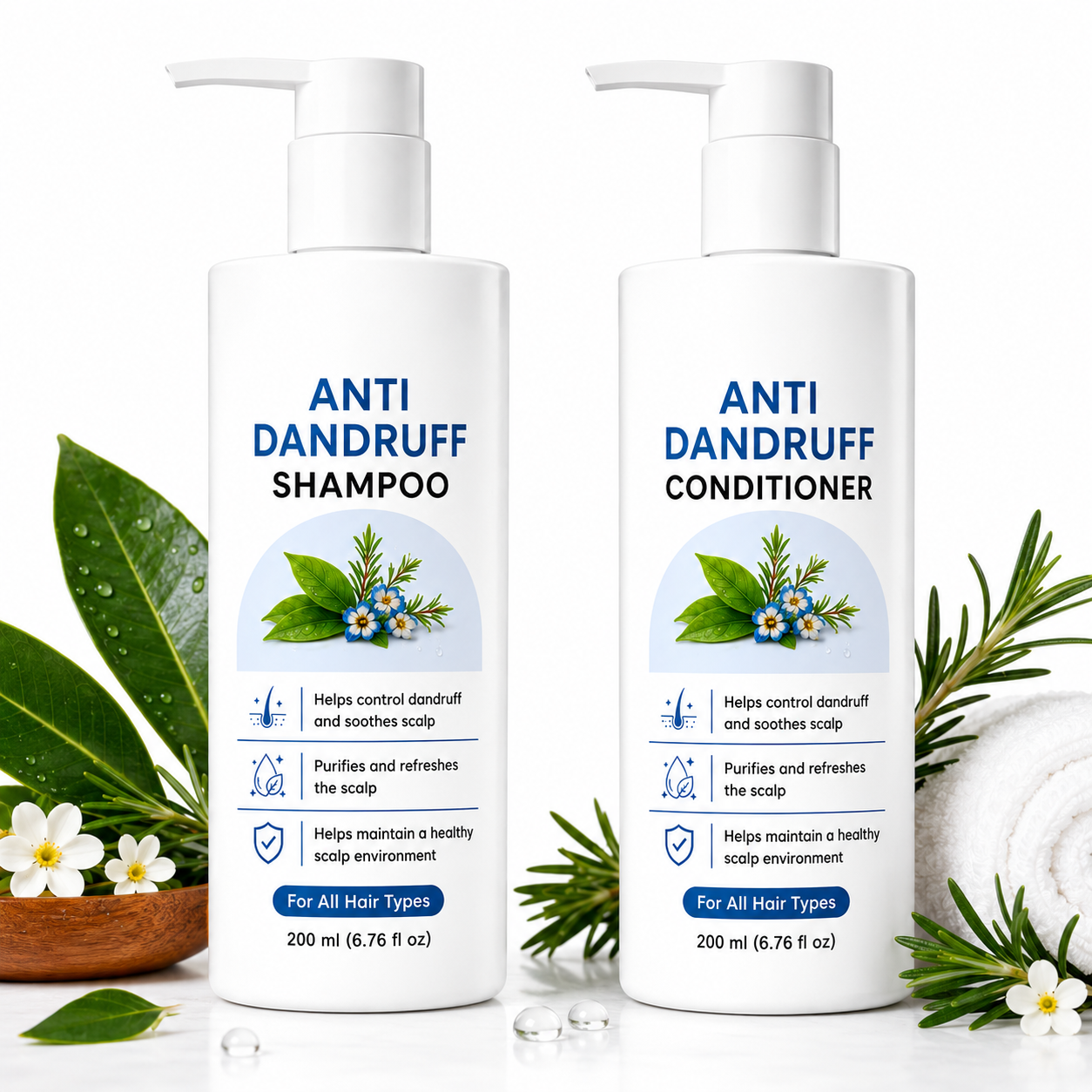
Choose a shampoo formulated with botanical surfactants that break down oil without leaving plasticizing films. Massaging a clarifying option like Rosemary Shampoo into the scalp helps lift oxidized oils and environmental impurities while refreshing the root environment. If you also notice visible flaking or yeast-related irritation, an Anti-Dandruff Shampoo with tea tree and purifying actives can provide dual-action scalp relief.
Step 3: Use the Pads of Your Fingers (Never Fingernails)
Place the fleshy pads of your fingertips against your scalp and use small, firm circular motions for a full 60 to 90 seconds. Focus on the crown, hairline, and nape of the neck where buildup concentrates most heavily. Avoid using fingernails, which create micro-tears that invite bacterial irritation.
Step 4: Double Cleansing on Wash Days
If you use heavy styling products, dry shampoo, or wash your hair less than twice weekly, double cleansing makes a dramatic difference:
- First Wash: Emulsifies and breaks down superficial oils, dust, and product layers. It will produce minimal lather.
- Second Wash: Produces a rich, dense lather that lifts deep follicular residues cleanly off the scalp.
Step 5: Keep Conditioner Away from the Roots
After rinsing, squeeze out excess water and apply your conditioner—such as Rosemary Conditioner—strictly from mid-lengths to ends. Rinse thoroughly with cool water to smooth the cuticle.
How Often Should You Wash Your Hair?
Wash frequency should match your personal scalp profile, activity level, and product habits rather than a rigid schedule:
| Scalp Type / Routine | Recommended Wash Cadence | Key Recommendation |
|---|---|---|
| Oily Scalp or Daily Exercise | Every 1 to 2 days | Gentle clarifying with Rosemary Shampoo |
| Balanced / Normal Scalp | 2 to 3 times weekly | Regular wash-and-condition cadence |
| Dry or Chemically Treated Hair | 1 to 2 times weekly | Gentle cleansing with focused mid-length moisture |
| Frequent Styling / Dry Shampoo Users | 2 to 3 times weekly | Double cleansing on primary wash days |
For a complete breakdown of customized routines, read our in-depth guide on How to Build a Simple Hair-Care Routine for Your Hair Type.
Mistakes That Can Make Scalp Buildup Worse
- Scratching with fingernails: Digging your nails into itchy buildup damages the epidermal barrier, causing inflammation and scabbing that mimics worse flaking.
- Using dry shampoo to delay washing repeatedly: Layering dry shampoo for three or four consecutive days traps bacteria and sweat against follicle pores.
- Applying hair oils to an already congested scalp: Applying heavy castor or coconut oil onto a buildup-laden scalp acts like fuel for the buildup matrix. Oils should only be applied to a clean scalp or dry hair lengths.
- Rinsing in a hurry: Shampoos need adequate rinse water to carry emulsified grime down the drain. Always rinse for at least 60 seconds after shampooing.
A Simple Weekly Scalp-Care Routine
- Midweek Wash: Cleanse with Rosemary Shampoo to remove daily sebum and styling dust. Follow with conditioner on hair ends.
- Weekend Clarifying Session: If you experience flaking or heavy residue, use Anti-Dandruff Shampoo as a targeted clarifying wash, leaving it on the scalp for 2 minutes before rinsing.
- If Hair Gets Oily Quickly: If your roots become greasy within 24 hours of washing, review our guide on Why Does My Hair Get Oily So Fast? 9 Possible Reasons to adjust your washing technique.
When Should You See a Dermatologist?
Scalp buildup is a cosmetic issue that responds well to improved cleansing habits. However, certain scalp symptoms require evaluation by a qualified medical dermatologist:
- Persistent intense scalp redness, swelling, or burning sensations
- Thick, yellowish, greasy crusts that adhere painfully to the skin
- Cracking, bleeding, or weeping fluid along the hairline or behind the ears
- Circular scaly plaques that spread across the scalp
- Sudden, patchy hair shedding accompanied by scalp discomfort
These symptoms may indicate medical dermatological conditions such as seborrheic dermatitis, scalp psoriasis, or contact dermatitis, which require targeted prescription therapy rather than cosmetic adjustments alone.
Frequently Asked Questions
Scalp buildup does not directly destroy hair follicles or cause permanent genetic hair loss. However, heavy buildup can harbor micro-organisms, cause low-grade follicular inflammation, and create mechanical friction during detangling, which may lead to increased daily strand breakage and temporary shedding.
Yes. When dead skin cells and product residues coat the scalp, natural sebum cannot flow smoothly down the hair shaft. Oil pools around the roots, making hair look greasy, flat, and limp much faster than normal.
No. Scalp buildup is primarily a collection of dried products, sweat, and trapped sebum that clears with thorough cleansing. Dandruff is a biological response to the Malassezia fungus metabolizing scalp lipids, producing loose, visible flakes that require anti-dandruff actives like tea tree or zinc.
Most people benefit from cleansing 2 to 3 times per week. If you have an oilier scalp or exercise daily, washing every 1 to 2 days with a gentle, sulfate-free shampoo is appropriate to prevent buildup accumulation.
A well-formulated, sulfate-free botanical shampoo used with a double-cleansing technique and thorough finger-pad massage is usually sufficient to remove standard buildup. If buildup has accumulated over weeks, an active clarifying or anti-dandruff shampoo will lift residues more effectively.


