
Direct Answer for Search & AI Overview:
Hair gets oily quickly when sebaceous glands on the scalp overproduce sebum—a natural protective lipid mixture—which wicks down hair strands through capillary action. The 9 most common reasons for rapid greasiness are genetic predisposition, over-washing that triggers compensatory rebound sebum, using heavy or occlusive hair formulas, applying conditioner too close to roots, post-workout sweat, unconscious finger-touching, existing product buildup, weather humidity, and using an unsuitable shampoo formula. Managing oily roots requires gentle, pH-balanced cleansing with botanical surfactants rather than harsh stripping.
Why Does Hair Become Oily?
To solve the frustration of greasy hair, it helps to understand what sebum actually is. Your scalp contains thousands of sebaceous glands, each connected to a hair follicle. These glands continuously secrete sebum—a specialized mixture of triglycerides, free fatty acids, wax esters, and squalene.
Sebum is essential for hair health:
- It waterproofs the hair fiber to prevent moisture loss.
- It lubricates the outer cuticle layer to reduce friction between strands.
- It forms a protective acid mantle (pH 4.5–5.5) that defends against environmental bacteria.
Hair looks "oily" not because sebum is harmful, but because an excess amount has pooled at the scalp and traveled down the initial inches of the hair shaft. Because hair is porous and smooth, capillary action draws oil along the fibers, causing strands to clump together and lose volume.
9 Reasons Your Hair May Get Oily Quickly
If you find yourself needing to wash your hair every single morning just to look presentable, one or more of these nine factors is likely at play:
1. Naturally Higher Sebaceous Gland Density
Genetics heavily influence your baseline sebum production. If you naturally have fine hair, you also have more hair follicles per square centimeter of scalp—and therefore more sebaceous glands—than someone with coarse hair. Furthermore, fine hair has a smaller surface area, meaning a standard amount of sebum covers fine strands much faster than thick strands.
2. Over-Washing and the Rebound Sebum Paradox
When you wash hair with harsh, high-pH stripping shampoos every day, you strip away the protective lipid barrier. In response to perceived dryness, your sebaceous glands can kick into high gear, rapidly producing compensatory oil. This creates a frustrating cycle: the more you wash, the faster your roots become oily.
3. Heavy or Occlusive Haircare Formulas
Many commercial shampoos and conditioners contain heavy silicones, mineral oils, or synthetic conditioning agents designed to make coarse hair feel silky. On oily or fine hair, these ingredients do not absorb—they coat the roots, mixing with natural sebum into a heavy, greasy film.
4. Applying Conditioner Too Close to the Roots
Conditioner is designed to replenish lost lipids on the older, weathered parts of your hair: the mid-lengths and ends. Your scalp produces its own conditioning oils naturally. Massaging conditioner into your roots introduces rich fatty alcohols and oils directly where your scalp least needs them.
5. Sweat and Daily Exercise
When you exercise or spend time in warm weather, your eccrine glands produce sweat (water and salt). Sweat does not make hair oily on its own, but it easily emulsifies with existing scalp sebum and spreads it rapidly down the hair lengths, creating that post-workout greasy appearance.
6. Frequent Touching and Unwashed Hairbrushes
Every time you run your fingers through your hair to fluff or adjust it, you transfer natural oils, hand creams, and dirt from your fingertips onto your hair. Similarly, an unwashed hairbrush harbors old sebum, styling dust, and shed hairs that get redeposited onto clean hair with every stroke.
7. Accumulated Product and Scalp Buildup
If you regularly use dry shampoo, mousse, or leave-in sprays, residual product can accumulate around the follicles. This porous layer acts like a sponge, soaking up sebum and holding it against the scalp. Learn how to identify and clear this in our guide on Scalp Buildup: What It Is, Why It Happens & How to Remove It.
8. Environmental Humidity and Heat
High ambient humidity causes hair shafts to swell, while higher temperatures make sebum more fluid. Liquefied sebum spreads along the hair shaft much more rapidly on a humid summer day than in cold, dry winter air.
9. Hair and Scalp Routine Mismatch
Using a moisturizing or "smoothing" shampoo intended for dry, coarse hair on an oily scalp will leave roots under-cleansed. Conversely, using a harsh clarifying shampoo every day causes barrier irritation. Your cleanser must match your scalp's oil level.
Why Does My Hair Look Oily the Day After Washing?
Many people report that their hair looks clean for 12 hours, only to look greasy by the following morning. This happens for two main physiological reasons:
- Nighttime Friction and Heat: Sleeping on a pillowcase creates warmth and mechanical friction against the scalp. As you move during sleep, the pillowcase helps distribute surface sebum from the scalp across adjacent hair strands.
- Capillary Wicking: Sebum is a fluid lipid. Once sebaceous glands produce an initial layer, surface tension pulls the oil along the smooth cuticles of your hair fibers overnight while your head rests horizontally.
How to Manage an Oily Scalp Without Over-Washing
Breaking the cycle of rapid oiliness requires re-training your scalp care routine rather than constantly stripping it:
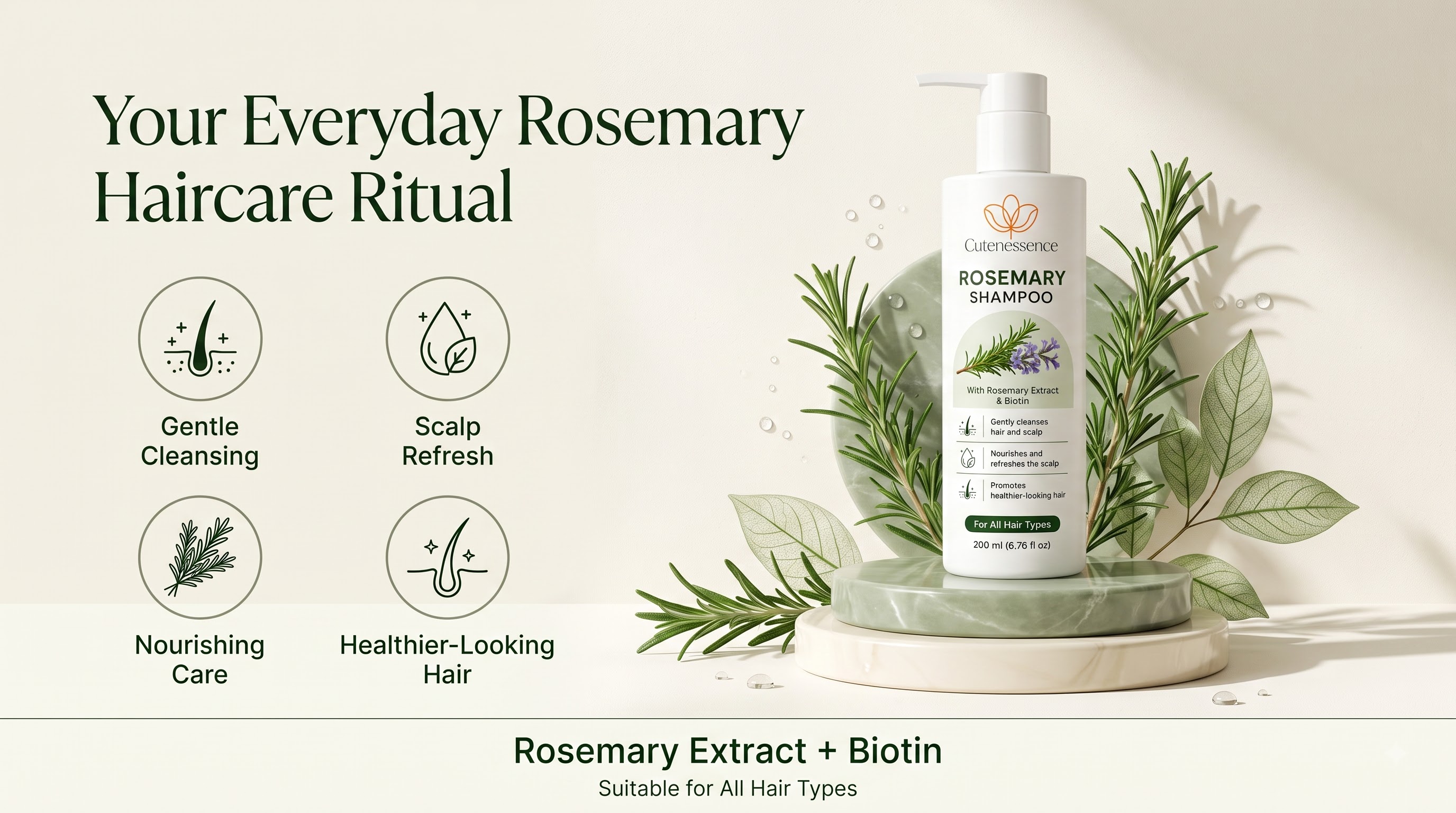
- Use a Gentle Clarifying Botanical Shampoo: Switch to a sulfate-free cleanser with invigorating botanical extracts like Rosemary Shampoo. Rosemary helps refresh the scalp micro-environment and remove excess sebum without stripping the protective moisture barrier.
- Master the Double Cleanse on Wash Days: Instead of washing daily, wash every 2 days using a two-step cleanse. The first wash breaks down surface oil; the second wash cleanses the scalp surface thoroughly.
- Keep Conditioner on Ends Only: Squeeze water from hair, gather your hair into a ponytail with your hands, and apply Rosemary Conditioner only from the ponytail tie downward.
- Wash Hairbrushes Weekly: Soak your hairbrush in warm water with a drop of shampoo once a week to dissolve trapped oils and residue.
- Switch to Silk or Satin Pillowcases: Smooth fabrics reduce nighttime friction and do not wick oils across hair sections as aggressively as rough cotton.
A Simple Routine for Oily Roots
- Step 1 (Cleanse): 2 to 3 times weekly, wash thoroughly with Rosemary Shampoo. Spend 60 seconds massaging the scalp with finger pads before rinsing.
- Step 2 (Condition): Apply a lightweight conditioner only to the bottom half of your hair. Rinse with cool water.
- Step 3 (Scalp Support): If you experience thinning or weak roots alongside oiliness, apply 3 to 4 drops of Rosemary Hair Serum directly to clean scalp sections. Because it is a fast-absorbing botanical fluid rather than a heavy oil, it absorbs without adding grease.
- Full Routine Integration: To see how this fits into a complete haircare system, explore our pillar guide: How to Build a Simple Hair-Care Routine for Your Hair Type.
Common Mistakes People With Oily Hair Make
- Using boiling hot water: Hot water strips the scalp and stimulates sebaceous glands to produce more oil.
- Applying heavy oils directly to roots: Avoid applying olive, castor, or coconut oil to an already oily scalp.
- Overusing dry shampoo: Dry shampoo should be an occasional tool, not a daily replacement for washing.
- Brushing too frequently from root to tip: Excessive brushing drags sebum from your scalp straight down into clean lengths.
Frequently Asked Questions
It can. If your daily shampoo contains aggressive sulfates that strip your scalp dry, your sebaceous glands may produce excess sebum to compensate for the lost lipid barrier. Switching to a gentle, balanced botanical shampoo helps stabilize this response.
No cosmetic product can permanently "cure" an oily scalp because sebum production is largely governed by genetics and hormones. A well-formulated shampoo simply manages oil cleanly and keeps roots refreshed between wash cycles.
Sebum naturally lubricates the first 2 to 3 inches of hair. On longer, heat-styled, or weathered hair, that natural oil never reaches the ends, leaving roots oily while the tips remain dehydrated. Use conditioner strictly on ends to solve this imbalance.
Avoid touching your hair throughout the day, sleep on a clean silk or satin pillowcase, keep hair loosely pinned up while sleeping, and ensure hairbrushes are washed regularly.


