
Direct Answer for Search & AI Overview:
Neither rosemary water nor rosemary hair serum is universally "better"—their suitability depends on your routine preferences, scalp tolerance, and haircare goals. Rosemary water (a boiled tea or hydrosol) is an ultra-lightweight, non-greasy liquid ideal as a refreshing daytime mist, but its active botanical concentration is minimal because key diterpenes like carnosic acid are oil-soluble and do not extract efficiently into water, and homemade versions spoil within days without preservation. A formulated Rosemary Hair Serum, by contrast, delivers standardized concentrations of rosemary actives in a stabilized lipid-water carrier paired with co-factors like Biotin and Caffeine, making it far more effective for targeted scalp stimulation and leave-in root care.
Why Is Rosemary Popular in Haircare?
Rosemary (Rosmarinus officinalis) has become one of the most talked-about botanicals in modern hair and scalp care. While traditional Mediterranean and Ayurvedic practices have used rosemary infusions for centuries, modern cosmetic science has clarified the real biological mechanisms behind the plant:
- Scalp Micro-Circulation Support: Rosemary contains volatile terpenes (such as 1,8-cineole and camphor) that provide a gentle invigorating sensation on the scalp, encouraging localized capillary micro-circulation around the hair bulb.
- Antioxidant Protection with Carnosic Acid: Carnosic acid and rosmarinic acid are potent polyphenolic antioxidants that neutralize lipid peroxidation and free-radical oxidative stress near the follicle opening.
- Microbiome Balance: Rosemary exhibits natural antimicrobial properties that help maintain scalp cleanliness and soothe mild flaking.
Evidence-Based Caution: While rosemary is an outstanding cosmetic active for scalp wellness, it is not a miraculous cure for genetic pattern baldness or scarring alopecia. Consistent use over 3 to 6 months helps create an optimal scalp environment for healthy-looking hair growth, but results require patience and proper formulation.
What Is Rosemary Water?
Rosemary water is typically prepared either by boiling fresh rosemary sprigs in water (creating a herbal tea infusion) or through steam distillation (producing a cosmetic hydrosol).
Potential Advantages:
- Completely Weightless: Because it is essentially water, it leaves zero greasy residue and can be sprayed freely over roots and lengths.
- Pleasant Natural Fragrance: Provides a crisp, herbaceous scent that refreshes hair between wash days.
- Simple to Prepare at Home: Accessible and inexpensive to brew in a kitchen.
Critical Limitations:
- Poor Active Extraction: The most potent hair-stimulating compounds in rosemary—particularly carnosic acid and essential terpenes—are lipophilic (fat-soluble). They do not dissolve in water. Boiled rosemary tea extracts primarily water-soluble tannins, leaving the most valuable follicle actives behind.
- Rapid Microbial Contamination: Water without cosmetic preservatives is a breeding ground for bacteria, mold, and yeast. DIY rosemary water stored in the refrigerator often develops microbial growth within 3 to 5 days, risking scalp folliculitis.
- Surface Evaporation: Water sprayed on the scalp evaporates into ambient air within minutes, providing minimal trans-epidermal absorption time.
What Is Rosemary Hair Serum?
A formulated cosmetic Rosemary Hair Serum is engineered by cosmetic chemists to overcome the physical limitations of water infusions. Rather than relying on simple boiling, a serum utilizes standardized solvent extracts or essential oils stabilized in an elegant, fast-absorbing carrier.
Key Advantages:
- Standardized Active Potency: Every drop delivers a consistent, research-aligned concentration of carnosic acid and rosemary terpenes.
- Enhanced Scalp Penetration: Formulated with lightweight lipid co-solvents that penetrate the lipid-rich stratum corneum instead of evaporating from the surface.
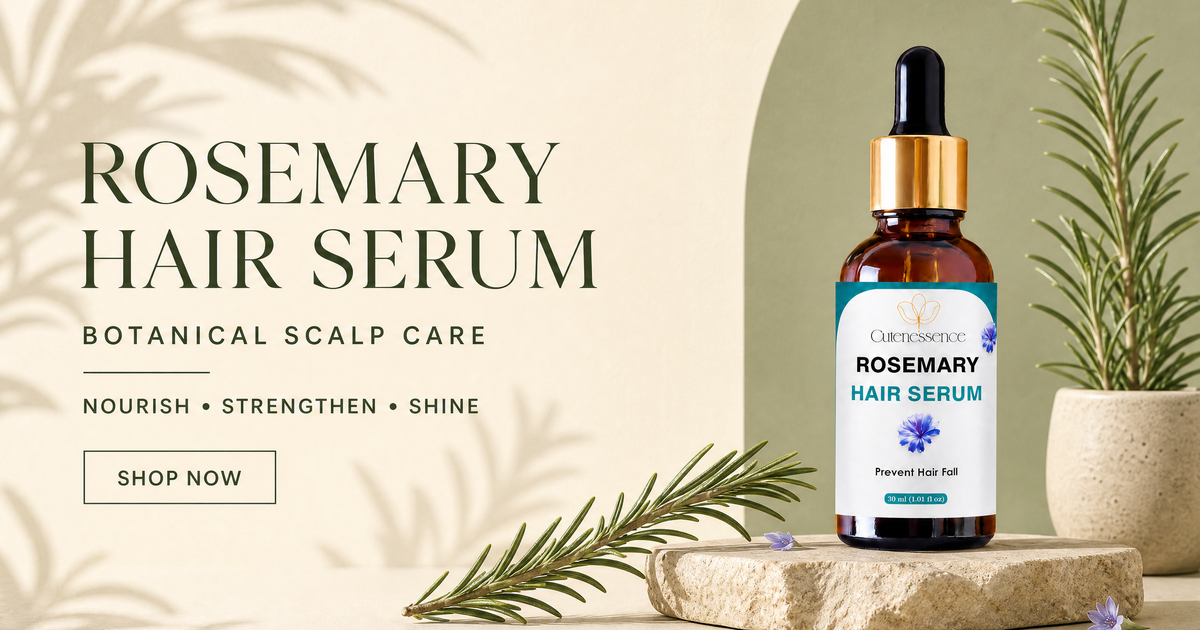
- Synergistic Co-Actives: Premium formulas, such as Cutenessence Rosemary Hair Serum, combine rosemary extract with synergistic actives: Biotin (Vitamin B7), Caffeine, and Hydrolyzed Keratin to nourish hair roots and reinforce strand resilience.
- Microbiologically Safe: Professional cosmetic preservation ensures the serum remains sterile, stable, and effective for up to 24 months at room temperature.
- Non-Greasy Finish: Modern cosmetic formulation avoids thick carrier oils, allowing the serum to absorb cleanly within 2 minutes without flattening hair.
Rosemary Water vs Rosemary Serum — Key Differences
| Attribute | Rosemary Water (Hydrosol / Tea) | Formulated Rosemary Hair Serum |
|---|---|---|
| Physical Format | Thin watery liquid spray | Concentrated, lightweight fluid drops |
| Active Compound Level | Very low (water-soluble fractions only) | High & standardized (lipophilic carnosic acid + terpenes) |
| Scalp Lipid Penetration | Minimal; dries rapidly on the surface | High; engineered to cross the epidermal lipid barrier |
| Formulation Stability | 3–5 days (DIY) before microbial spoilage | 24 months (stabilized cosmetic formula) |
| Routine Convenience | Needs frequent brewing & refrigeration | Ready-to-use dropper bottle at room temperature |
| Root Weight & Greasiness | Completely weightless | Weightless fluid; absorbs without residue |
| Best Used For | Refreshing daytime hair mist / hydration | Targeted scalp stimulation & leave-in root care |
Which One Should You Choose?
Your choice depends on your daily lifestyle and routine focus:
- Choose Rosemary Water if: You want a light, fragrant daytime mist to refresh dry lengths after a workout, or you enjoy quick DIY mists and are diligent about preparing fresh batches every few days.
- Choose Rosemary Hair Serum if: You are seeking targeted scalp stimulation, active root nourishment, consistent daily potency, and want to support strand density over a 3-to-6 month period without kitchen prep or spoilage risks.
For most people focused on visible hair strand fullness and scalp wellness, a formulated serum provides far superior active delivery.
How to Use a Rosemary Hair Serum Properly
To get maximum benefit from a leave-in serum like Cutenessence Rosemary Hair Serum, apply it with this structured technique:
- Start with a Clean, Dry or Towel-Damp Scalp: Serums penetrate best when follicular pores are free of thick scalp buildup.
- Part Hair into Sections: Use a comb or fingers to create 3 to 4 parts across your scalp, exposing the skin directly.
- Apply 4 to 6 Drops: Dispense droplets along the exposed part lines, focusing on areas of concern such as the hairline or crown.
- Massage for 2 Full Minutes: Use the pads of your fingers in gentle, firm circular motions. This stimulates localized blood flow and evenly distributes the serum across follicle openings.
- Leave In: Do not rinse out. Allow at least 4 to 6 hours—or leave on overnight—for full botanical absorption. Use 3 to 4 times weekly.
How to Build Rosemary Into a Simple Hair Routine
Rosemary performs best when integrated harmoniously across wash days and leave-in care:
- Wash Days (2–3 times weekly): Cleanse your scalp thoroughly with Cutenessence Rosemary Shampoo to wash away sebum and environmental impurities. Condition mid-lengths to ends with Rosemary Conditioner.
- Treatment Nights (3–4 times weekly): Apply Rosemary Hair Serum directly to the scalp before bed.
- Full Routine Context: Explore our complete pillar guide on How to Build a Simple Hair-Care Routine for Your Hair Type to align your routine with your specific scalp profile.
- Scientific Deep Dive: For a comprehensive review of clinical research comparing rosemary with minoxidil, read our research breakdown: Does Rosemary Oil Really Work for Hair Growth?.
Common Rosemary Haircare Mistakes
- Applying undiluted rosemary essential oil: Pure essential oil can cause chemical burns, contact dermatitis, and severe scalp redness. Always use properly diluted or pre-formulated cosmetic serums.
- Using spoiled DIY rosemary water: Using homemade rosemary water that has been kept at room temperature for over 48 hours exposes your scalp to bacterial colonization.
- Expecting overnight changes: Hair fibers grow at an average rate of 1 to 1.25 cm per month. Botanical scalp actives require 12 to 24 weeks of consistent application to demonstrate noticeable cosmetic improvements.
Frequently Asked Questions
Not for targeted scalp stimulation. Rosemary water lacks lipid-soluble carnosic acid and cannot penetrate the scalp's lipid barrier effectively. It works wonderfully as a surface hydrating mist, but a serum is necessary for active root delivery.
A high-quality cosmetic serum like Cutenessence Rosemary Hair Serum is formulated as a lightweight, water-fluid emulsion that absorbs into the scalp within 2 minutes without leaving an oily film or weighing down roots.
Apply 4 to 6 drops 3 to 4 times per week onto clean scalp sections. Consistent regular use over several months is more effective than applying large amounts infrequently.
Yes. In fact, leaving the serum on overnight gives the botanical actives and co-factors like Biotin and Caffeine ample time to absorb into the scalp while you sleep.


